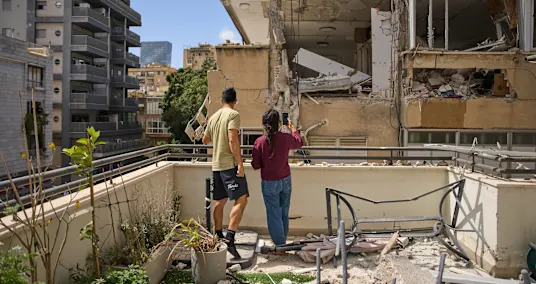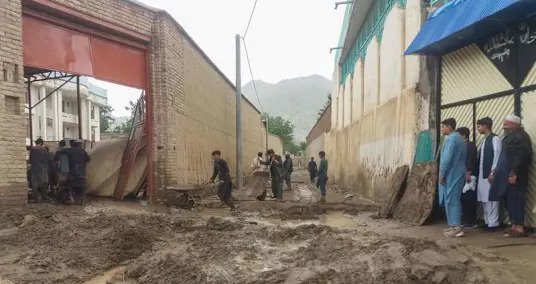
At least 61 people have been killed and 116 injured across Afghanistan since March 26 due to heavy rainfall, floods, landslides and lightning strikes, the Afghan government said on Saturday.
At least four people were still missing after floods affected thousands of families and damaged 2,448 houses, Afghan government spokesman Zabihullah Mujahid said in a post on X.
In addition, thousands of hectares of cropland was also destroyed, posing serious risks to rural communities who rely on agriculture for their livelihoods.
Deadly flooding has struck Afghanistan repeatedly in recent years, causing significant loss of life, injuries and widespread damage to homes, infrastructure and agricultural land.
Extreme weather events such as flash floods and droughts are increasing in Afghanistan, which experts link to the climate crisis.
Despite having a negligible carbon footprint, the country ranks among the most climate-affected nations and remains ill-prepared to cope after decades of conflict, poor infrastructure and a struggling economy, compounded by recent earthquakes and severe flooding.
latest_posts
- 1
 Help Your Business with Master Web based Promoting Arrangements
 - 2Journalists killed by Israeli strike in southern Lebanon
- 3What we know about Jonathan Ross, the ICE agent who shot and killed Renee Nicole Good in Minneapolis
- 4Accomplishing Balance between fun and serious activities: Procedures for a Better Life
- 5Best Getaway destination: Ocean side, Mountain, or City



- New science points to 4 distinct types of autism
- Woman charged in unprovoked stabbing of tourist changing baby's diaper in Macy’s Herald Square store
- Watch Rocket Lab launch Japanese technology-demonstrating satellite to orbit tonight
- Manual for Savvy Home Lighting Framework: Lights up Your Space
- Progress Over Perfection: Lessons From Garment Factories Fighting Heat Stress
- Lebanon’s Hezbollah and Yemen’s Houthis join Iran in strike on Israel
- Starbucks' new 'Bearista' cup is causing a stir — and is being listed on eBay for $600
- Tire Brands for Senior Drivers: Guaranteeing Security and Solace
- IDF begins destroying homes used by Hezbollah as forces move deeper into southern Lebanon